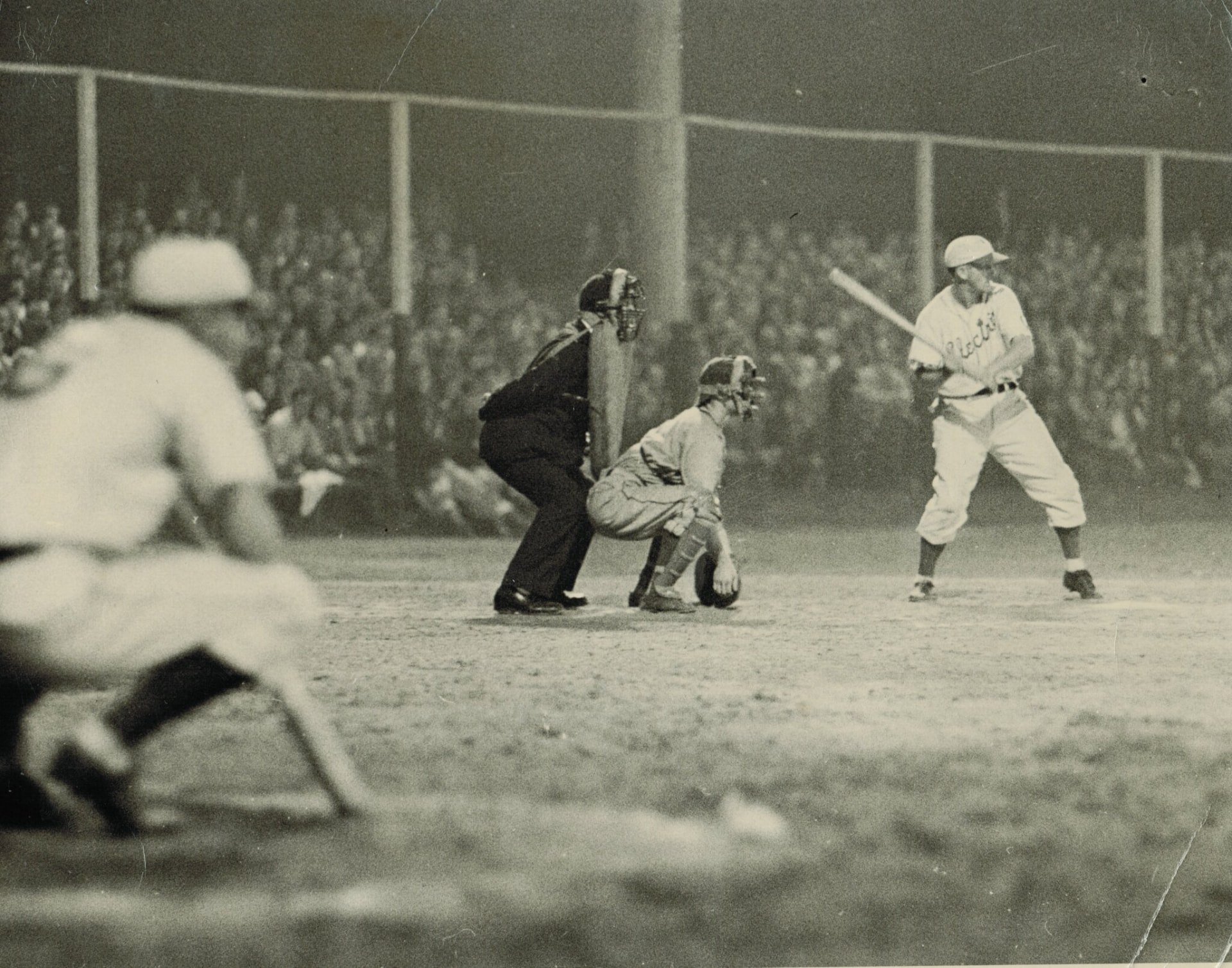
Play Ball — And Keep Scoring
How college baseball stayed true to its high-scoring roots. From a 73–33 final in 1859 to the aluminum bat era, the college game has never stopped hitting.
The first college baseball game was between Amherst and Williams on July 1, 1859, on a field in Pittsfield, Massachusetts. Final Score: Amherst 73, Williams 33.
That's not a misprint.
The game was played under the so-called "Massachusetts Rules," which meant 13 players per side, one out per inning, and the goal was simply to reach 65 "tallies" — what we now call runs. You could also retire a runner by throwing the ball at him and hitting him, a rule that, mercifully, did not survive. The whole affair took about three and a half hours, which, come to think of it, isn't all that different from a modern nine-inning game.
But the score? That was a product of its time.
A Game Built for Hitters
Baseball in the mid to late 1800s was a high-scoring affair by design. Part of it was equipment: bats were offensive weapons, but gloves were barely in the picture. Fielders caught — or tried to catch — the ball with bare hands, a practice that persisted longer than you might think. It wasn't until the late 1870s that gloves began to gain acceptance. Albert Spalding, the sporting goods magnate and former player, famously wore one at first base in 1877, and it wasn't until the 1880s that their use became nearly universal. Before that, every ground ball was an adventure.
The rules tilted toward offense as well. In the early game, a batter could call for the location of the pitch — essentially demanding that the pitcher throw the ball where the hitter wanted it. It was, to put it charitably, a game designed by batters, not pitchers.
Baseball's spread across America owed a great deal to the Civil War. Soldiers on both sides played in camp, learned the game from one another, and carried it home. If there is one thing that helped knit a fractured country back together after the war, it was this shared pastime. Sports have a way of doing that: witness the recent World Cup. Colleges began forming teams in the postwar years, and by the 1880s baseball was firmly established on campuses across the country.
The modern game — with pitchers on equal footing with hitters, tightly wound balls, and scores ending in single digits — took shape after 1900. The so-called "dead ball" era, which ran from roughly 1900 to 1919, was actually a period of lower scoring compared to the freewheeling 1800s: pitchers dominated, home runs were rare, and manufacturing runs one at a time became an art. The live ball era dawned around 1920, when the spitball was banned and a livelier ball was introduced — and when a young Babe Ruth began teaching the country what a home run could look like.
Omaha, and the Grandest Stage
By then, college baseball had found some of its grandest stages. The sport never drew the crowds that football commanded, but there were genuine moments of spectacle. And in 1947, it all came together in Kalamazoo, Michigan, where the first College World Series was held. The University of California, coached by Clint Evans — the man most responsible for creating the tournament — defeated Yale 17–8 and 8–7 to claim the inaugural championship. The CWS has called Omaha, Nebraska home since 1950, and it remains there today, a genuine celebration of the college game.
But here is where college baseball diverges most sharply from its professional counterpart — and where it reconnects, in spirit, with those wild early days in Pittsfield.
The Aluminum Bat
In 1974, the NCAA approved the use of aluminum bats. The decision was driven primarily by economics: wood bats break; aluminum ones do not. For programs buying equipment on tight budgets, the math was simple. What followed was a statistical revolution. Batting averages climbed. Scoring climbed. By the late 1990s, the offensive explosion had grown impossible to ignore, and the NCAA stepped in with regulations to rein in bat performance — but aluminum stayed.
The gap between college and professional baseball today is striking. Luis Arraez of the San Francisco Giants leads the major leagues with a batting average of .326 — a number that, in any era, would make him one of the best hitters in the country. Meanwhile, Tanner Mally of Western Michigan University just finished the college season at .446. In the professional game, that figure would be mythological. In college, it's one year's batting title.
Scoring tells the same story. MLB teams average roughly four runs per game; combine both sides and you're looking at about eight runs per contest. In college baseball, six or seven runs per team per game is routine. The aluminum bat is the primary reason, though the smaller dimensions of many college ballparks don't hurt either.
And on those days when everything truly opens up, college baseball can still approach the spirit of that July afternoon in Pittsfield. The modern record for combined runs in a college game belongs to a 1968 matchup between Denver and Air Force, which finished 33–29 — 62 combined runs. Not quite the 106 combined runs of 1859, but still.
One more thing worth noting. While college baseball was establishing itself through the 19th and 20th centuries, college softball was finding its own path. Women had been playing organized college softball for decades, but the first NCAA Women's Softball Championship wasn't held until 1982. It's a rich history that deserves its own telling — and will get one in a future post.
For now, the aluminum bat endures. And so does something deeper: the DNA of that very first college baseball game, played under summer skies in Massachusetts, with 13 men on each side and a shared conviction that more runs, always, was a better thing.
Afterword
I'm not a huge baseball fan, but the sport seems to attract some of the very best writers. The latest example is Joe Posnanski's The Baseball 100 (2021), which I just started reading. You would think only baseball nerds would enjoy an 880-page book about the top 100 baseball players ever, but Posnanski is a master storyteller and writer. One of my credos is that "it's the stories and not the stats" that really move people when it comes to athletics — and while the book is filled with stats, it's the way Posnanski tells each player's individual story that is so engrossing.
The book features an Introduction by Pulitzer Prize winning political columnist George Will, whose own book, Men at Work (1990), is one of the all-time best sellers and classics in the field. George is a graduate of Trinity College, and I got to interview him as part of the Trinity sports history project. While George did not play sports in college, he was always a huge fan and served as sports editor for both the yearbook and the student newspaper. George said his dream was to become a baseball writer: what could be better than traveling around, writing about baseball, and enjoying steak dinners every night. Alas, politics pulled him away, but George told me that he is planning to file his last political column at the end of 2032, 60 years after his first, and return to his original dream of becoming a baseball writer. At that time, he will be 91 years old. I don't think he was entirely joking.
You can check out clips from George's interview here.
Wondering what's buried in your own athletics history? Let's have a conversation.