First to the Floor
The untold history of women's college basketball. Before March Madness, before the WNBA, there was a gymnasium in Northampton, a Lithuanian immigrant with a brand-new rulebook, and the first college basketball game in American history. The men came two years later.
Before there was March Madness, before there was the WNBA, before Caitlin Clark filled arenas from coast to coast — there was a gymnasium in Northampton, Massachusetts, a Lithuanian immigrant with a brand-new rulebook, and a group of college women who played the first basketball game in American collegiate history.
The men came two years later.
We tend to think of women's sports as catching up to men's, as arriving late to a party that was already well underway. Basketball tells a different story. It may be the only major American sport where women were there from the very beginning — and in some important ways, got there first.
Springfield, 1891
James Naismith nailed his peach baskets to a gymnasium balcony in December 1891. Within weeks, the game was spreading through the YMCA network. Within months, it had reached a young physical education instructor at Smith College in Northampton, Massachusetts — about 30 miles up the road.
Her name was Senda Berenson, and her story is one of the great untold chapters in American sports history.

Born Senda Valvrojenski in Vilna, Lithuania in 1868, she had immigrated to Boston as a child with her family. She was a frail girl with persistent health problems — too fragile, in fact, to complete her training at the Boston Conservatory of Music. In 1890 she enrolled at the Boston Normal School of Gymnastics, partly to improve her own health. Two years later she joined the faculty at Smith College as a teacher of physical training.
Then she heard about a new game being played down the road in Springfield.
Berenson got her hands on Naismith's original 13 rules and immediately saw the potential — but also the problems. The game as Naismith designed it was physical, combative, and built for the gymnasium culture of young men. Berenson adapted it. She divided the court into sections. She limited dribbling to three bounces. She prohibited stealing the ball. She reduced the physical contact that she worried would be considered unladylike and, frankly, that she thought would get the whole enterprise shut down before it started.
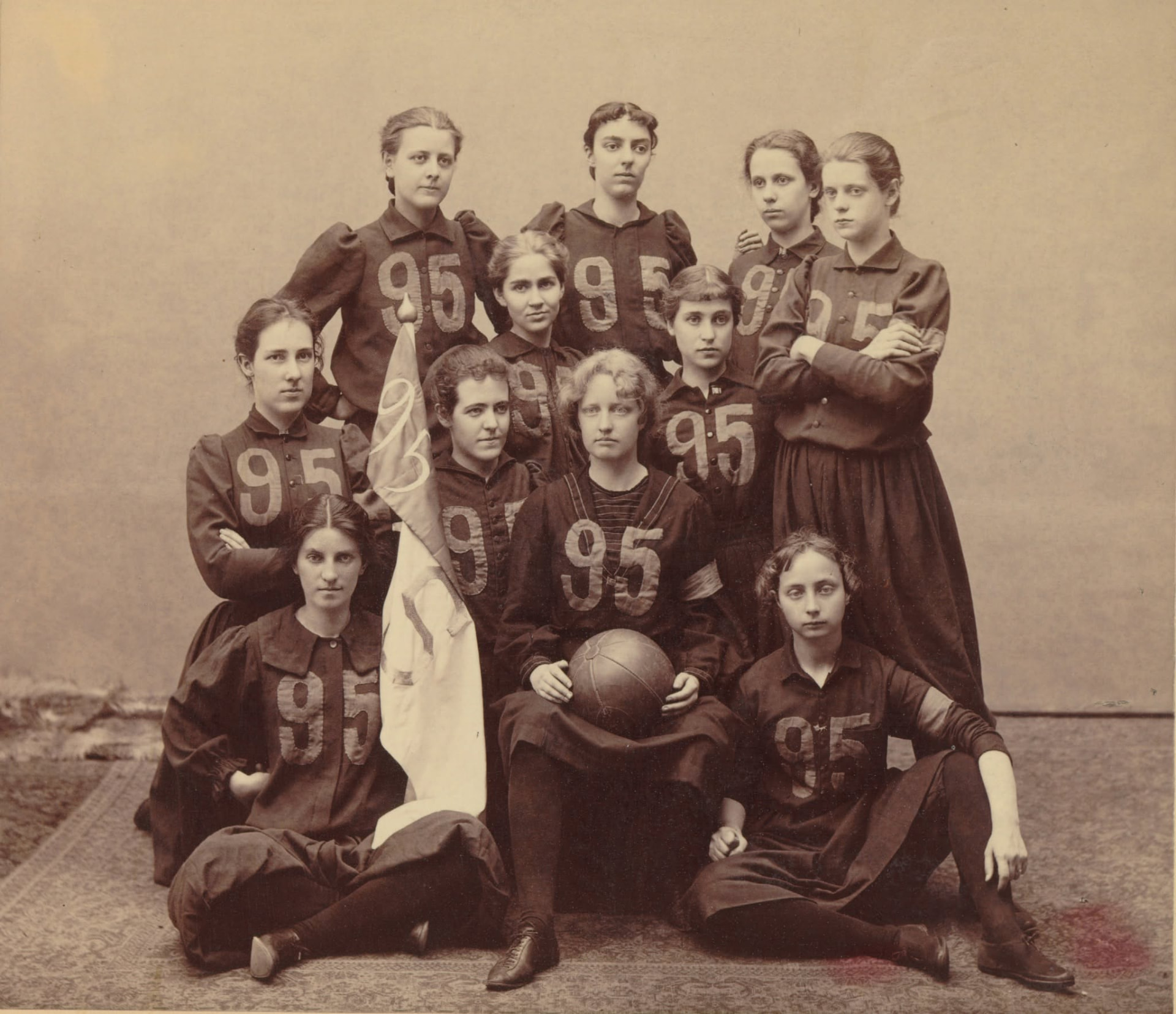
In the fall of 1892 — one year after Naismith invented the game — Berenson introduced basketball to the women of Smith College.
On March 22, 1893, she organized the first women's college basketball game in history: Smith freshmen against Smith sophomores. It was interclass, not intercollegiate, but it was real, it was competitive, and hundreds of students came to watch. The sophomores won, 5–4.
The first men's intercollegiate basketball game? That came on February 9, 1895 — two full years later.
The Sport Goes West
What happened next is remarkable given the era. There were no national media, no television, no internet. Communication moved by newspaper and mail. And yet within just a few years, women's basketball had spread from a small Massachusetts college to campuses across the country.
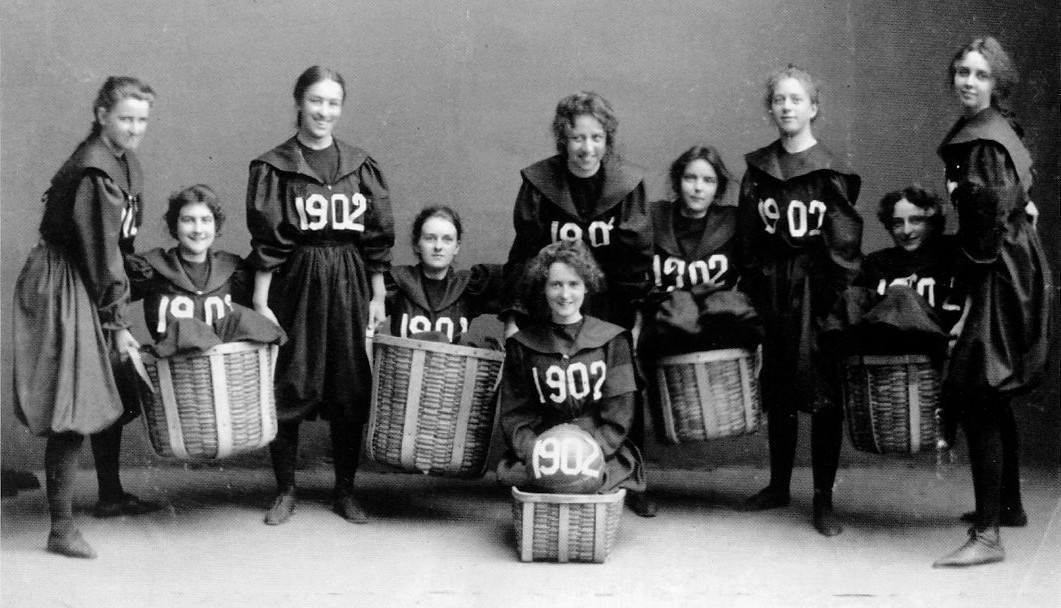
By 1893, Mount Holyoke and Sophie Newcomb College in New Orleans were playing. By 1895, Wellesley, Vassar, and Bryn Mawr had all organized teams. Radcliffe fielded a team and developed one of the sport's first fierce rivalries with Smith.
And then it reached California.
While doing research for a story on early college athletics, I came across a newspaper from San Francisco from the mid-1890s that was already reporting on women's basketball games involving UC Berkeley. At the time I thought: how did this game travel 3,000 miles across the country so fast, and how are women already playing it?
Now I know the answer. On April 4, 1896 — just five years after Naismith hung his peach baskets — Stanford University and the University of California played the first women's intercollegiate basketball game in history at San Francisco's Armory Hall.
Nine players to a side. The court divided into three zones. Two 20-minute halves. Stanford won, 2–1.
Only women were allowed to witness this historic game. No men allowed. This was 24 years before women could vote in the United States. And these young women were organizing, competing, and filling an arena on their own terms.
The first women's intercollegiate team competition of any kind in American history.
Different Rules
The women's game, by design, looked different from the men's game. Players could not cross the center line. They could not steal the ball. They could not run with it. The court was divided into sections, and you stayed in your section. To a young man accustomed to Naismith's original rules — physical, free-flowing, full court — the women's game probably did look restrained, even tame.
The irony is that these rules, intended to protect women's basketball from being seen as too rough, helped keep the women's game alive. While men's basketball was still sorting out whether it was a real sport or just a gymnasium novelty, women's basketball was quietly spreading from campus to campus, building a culture, and developing devoted players and fans.
Berenson introduced the game at Smith in 1892, but it was Clara Baer at Newcomb College in New Orleans who published the first formal rules for women's basketball in 1895 — a version she called "Basquette." Berenson followed with her own published guide in 1901, and it was her version that would eventually become the national standard, governing women's college basketball for nearly eight decades.
It was not until 1971 that the Division for Girls and Women's Sports officially adopted the five-player, full-court game for women at the college level — bringing women's rules in line with the men's game for the first time. And even that transition was uneven. In Iowa, high school girls played a six-on-six half-court version of basketball until 1993, a century after Berenson developed her original rulebook. The old game had deep roots.
Senda Berenson was inducted into the Basketball Hall of Fame in 1985 — a recognition that was, if anything, long overdue.
The Long Road to a Championship
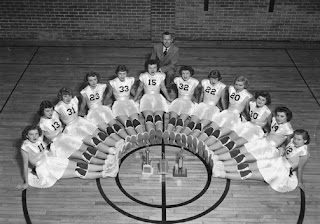
For most of the 20th century, women's college basketball had no national championship. No tournament. No spotlight. While the men's game built the NIT (1938) and then the NCAA Tournament (1939) into cultural institutions, women's basketball was largely organized at the local and regional level.
That began to change in the late 1960s.
In 1969, the Commission on Intercollegiate Athletics for Women (CIAW) organized the first national women's basketball tournament. Three years later, in 1972, the Association for Intercollegiate Athletics for Women (AIAW) took over and formalized the championship structure that would govern women's college sports for the next decade.
The first three AIAW national champions were not powerhouse programs. They were Immaculata College — a small Catholic women's school outside Philadelphia — who won the title in 1972, 1973, and 1974. Their story is one of the great underdog narratives in sports: a school with no gym of its own, traveling to away games in a station wagon, winning three straight national championships. If you do not know the Mighty Macs, you should.
Also in 1972: Title IX. The federal law prohibiting sex discrimination in educational programs that receive federal funding. It did not create women's basketball, but it funded it, staffed it, and gave it the institutional support it had always deserved.
In 1982, the NCAA absorbed women's basketball, holding its first women's tournament that year. Louisiana Tech won. The AIAW held a competing tournament the same year and then disbanded. The modern era of women's college basketball had begun.
130 Years Later
Last year, something happened that would have been unimaginable to Senda Berenson, to the Stanford players who took the floor at San Francisco's Armory Hall in 1896, or to the Immaculata Mighty Macs who piled into that station wagon in 1972.
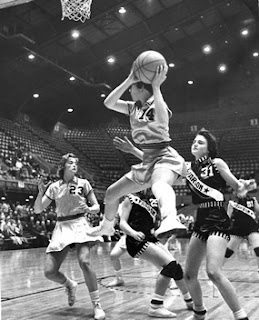
Women's basketball became the hottest ticket in American sports.
The 2024 NCAA Women's Tournament set all-time viewership records. The WNBA saw its average viewership nearly triple from 2023 to 2024 — from 462,000 viewers per game to 1.32 million. Over half of all WNBA games sold out, a 156% increase from the prior season. And in 2025, with the sport's most prominent player sidelined by injury for much of the season, WNBA viewership still rose another 21% and total attendance hit 3.15 million — up 34% year over year.
The growth is bigger than any one player. It is a 130-year story finally arriving at the moment it always deserved.
What the History Tells Us
I started researching this post with a thesis: that women's college basketball emerged at roughly the same time as men's, and possibly faster. The evidence is stronger than I expected.
Women played the first college basketball game in 1893. Men's first intercollegiate game came in 1895. Women reached the West Coast by 1896 — the same year men played their first five-on-five intercollegiate game in the Midwest.
Think about the other major American sports of that era. Rowing. Baseball. Football. Track. None of them had women playing at the college level in the 1890s. Basketball is unique. From the very beginning, it belonged to everyone.
The sport spent much of the 20th century playing by rules designed to make it look less threatening — and still survived, still spread, still found its audience. When those rules finally changed, when women were allowed to run the full court and play the game without restriction, it only took a generation to produce the competitive, passionate, nationally televised sport we watch today.
Senda Berenson walked into James Naismith's world in 1892 and saw something he had not fully imagined: a game for everyone. She spent her career trying to make that true.
It took 130 years. But she was right.
Wondering what's buried in your own athletics history? Let's have a conversation.