They Played for Their Schools. Then They Gave Everything.
Remembering the college athletes lost on September 11, 2001 — on the 25th anniversary of the attacks.
Let's start with Rich Lee.
I knew Rich from Yale, a teammate on the football team and a fellow member of Berkeley College. He was one of those people who made a room better just by being in it — physically enormous, 6'4" and 240 pounds, a defensive lineman who had come from Punahou School in Hawaii. And yet somehow, also one of the most creative, curious, and genuinely warm people you could meet.
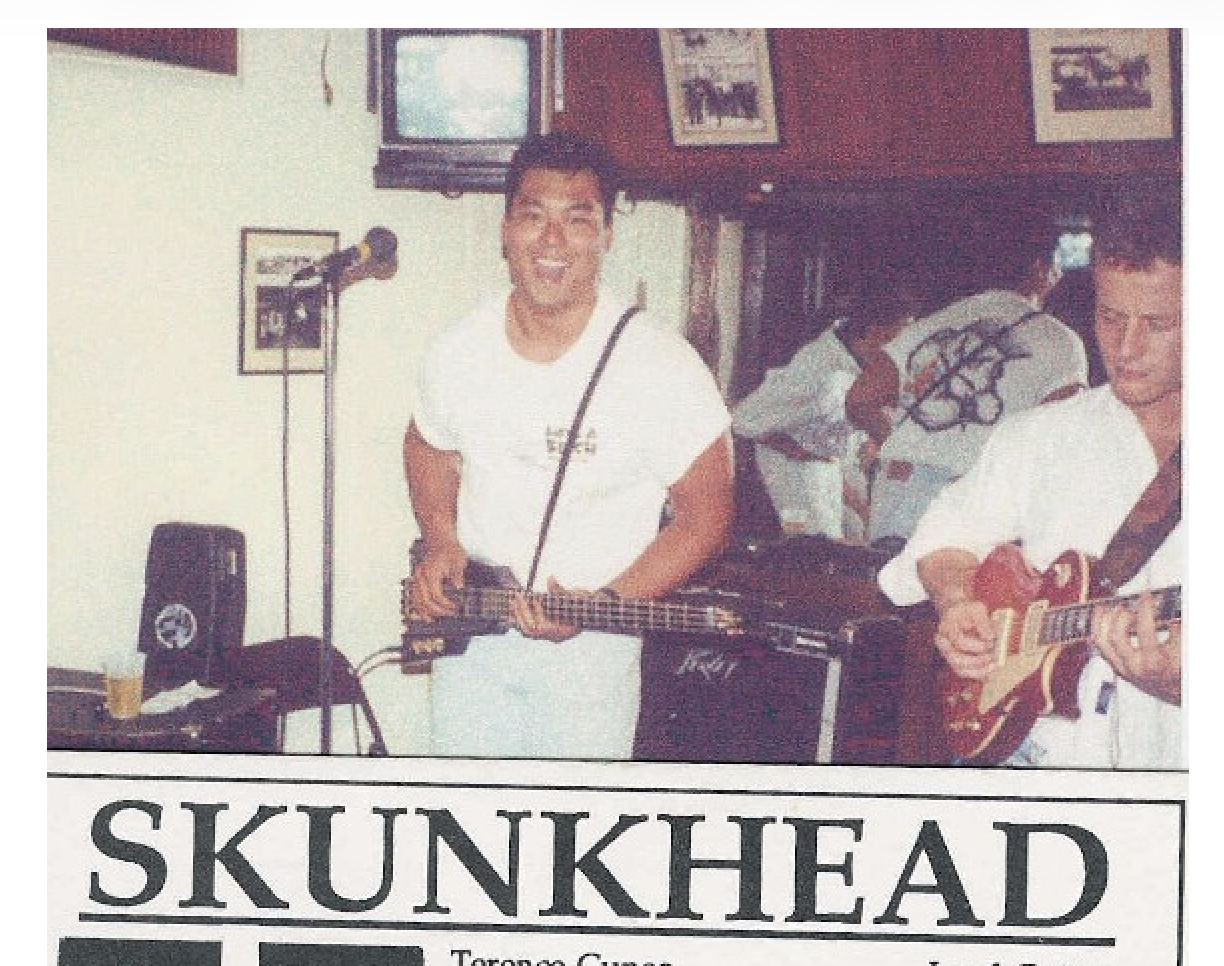
At Yale, in between two-a-days and classes, Rich majored in political science with a concentration in US-Soviet policy and studied Russian. He also found time to revitalize the Berkeley College snack bar in the basement, play bass in a band called Skunkhead, and publish a comic strip that became popular around campus. He was the kind of person who didn't just join things; he built them.
It was at Yale that Rich also met Karen Engelke, Class of 1990. They married in 1992.
I didn't know Rich as well as some, but a childhood friend, writing after Rich's death, captured something essential about him: "I wasn't Rich's best friend. It would just seem that way because of the supreme importance Rich seemed to place on all his interactions with other people."
On September 11, 2001, Rich was at his desk before 6 a.m. on the 104th floor of One World Trade Center, where he served as CIO of Equities Technology at Cantor Fitzgerald. He had already been on the phone with his London office from home before sunrise, as he did most mornings. Just after the plane hit, he called Karen to calmly reassure her, and then — in the kind of instinctive move that tells you everything about who someone is — he asked her to pass his cell phone number along to emergency workers, so they could reach him to help lead people out.
Five minutes later, when emergency workers tried that number, there was no answer.
Rich was 34 years old. He and Karen had just moved into their dream home in Great Neck. Their son Zachary was just weeks from his second birthday. Rich had been building toy chests and bookshelves for Zachary's playroom.
The Athletes in the Towers
The total number of people lost on September 11 was 2,977. Among them were police officers, firefighters, office workers, flight attendants, pilots, passengers, and people who just happened to be starting another ordinary Tuesday. And among them — not as a category but woven throughout — were former college athletes. People who had played on teams, wore numbers, run plays, given everything they had on a field or a court or a rink, and then gone on to the rest of their lives.
At least a dozen former college football players alone were killed that day.
Their stories do not make their deaths more significant than anyone else's. But because College Sports History is dedicated to remembering the people that the record books too often forget, today we remember them.
Eamon McEneaney, Cornell Lacrosse
Eamon McEneaney is considered by many to be the greatest college lacrosse player of his era. A three-time All-American at Cornell in the mid-1970s, he was a cornerstone of back-to-back national championship teams in 1976 and 1977. He was painted by LeRoy Neiman. His name is spoken at Cornell the way certain names are spoken at storied programs — with a reverence that doesn't fade.
McEneaney was also a Cantor Fitzgerald employee, working in the North Tower on September 11. What makes his story particularly haunting is what happened eight years earlier. In the 1993 bombing of the World Trade Center, McEneaney organized a human chain of 65 Cantor Fitzgerald employees and led them down a stairwell thick with black smoke to safety. He was known for staying calm under pressure — this was, after all, a man who had performed in front of crowds under the weight of championships.
In 2001, he was on the 105th floor when the plane hit. He was 46 years old, and a father of four. Eamon McEneaney did not make it out. The man who had led 65 people to safety in 1993 could not do it twice.
Welles Crowther, Boston College Lacrosse
Just three days ago, President Trump awarded the Presidential Medal of Freedom to Welles Crowther, known forever as the "Man in the Red Bandana." Crowther, who played lacrosse at Boston College and graduated in 1999, was working as an equities trader on the 104th floor of the South Tower when United Flight 175 hit the building.
What Crowther did in the next hour is now the stuff of legend. He had carried a red bandana since childhood — a gift from his father — and on September 11 he tied it across his face and went to work. He helped a group of injured survivors down the stairwell to safety. Then he went back up. And back up again. Survivors later described a man in a red bandana who guided them out of the smoke and flames; for years, no one knew who he was. His mother identified him only after hearing the survivors' descriptions.
Welles Crowther saved at least 18 people. He was 24 years old. Boston College's football team now plays a Red Bandanna Game each year in his honor. The bandana has become one of the most powerful symbols in college athletics.
Tom Burnett, St. John's University
Tom Burnett played quarterback at St. John's University in Minnesota before transferring to the University of Minnesota after an injury. On the morning of September 11, he was a passenger on United Flight 93.
From the plane, Burnett made a series of calls to his wife Deena. In those calls — pieced together afterward from transcripts — he assessed the situation, gathered information from other passengers, and helped organize the group that ultimately rushed the cockpit. "I know we're all going to die," he told her in one call. "There's three of us who are going to do something about it." The field in Shanksville, Pennsylvania, where Flight 93 went down, is now a national memorial. Tom Burnett was 38.
Others
There were more. Joe Eacobacci was a captain of the Georgetown football team in the mid-1990s — a linebacker whose number 35 was retired by the university, and whose name is now worn each year by the team's best player as a living tribute. Brent Woodall had been the eighth-ranked college football player in the country at Cal-Berkeley, working at Keefe, Bruyette and Woods in the South Tower. Chris Gray had quarterbacked West Virginia University and tried out for the Miami Dolphins before joining Cantor Fitzgerald. Dan Trant had played basketball at Clark University and briefly with the Boston Celtics before becoming a bond trader. Mark Bavis had played hockey at Boston University and was on his way to a scouting assignment when United Flight 175 took off from Logan Airport.
Each of them had a team. Each of them had coaches who watched them develop, teammates who counted on them, and crowds that cheered for them. Each of them carried that with them — the habits of discipline and resilience and care for the people around them that team sports build — into the rest of their lives. And on September 11, 2001, in ways large and small, visible and invisible, those qualities showed up again.
Twenty-Five Years
Rich Lee's son Zachary, who was not yet two years old when his father died, spoke at the tenth anniversary ceremony at Ground Zero in 2011. The walls of his father's office had been covered with hundreds of photos Karen would email him each day. Rich would read to Zachary each night and give him his bath. He had been building that playroom.
Zachary is 26 years old now. His whole life has been lived in the world that came after.
The college athletes we lost on September 11 were not lost because they were athletes. They were lost because they were there — like everyone else who was there that morning. But they lived the way athletes live: with their whole bodies in it, taking care of the people around them, staying calm when everything was falling apart. For some of them, that training made a final and extraordinary difference. For all of them, it was simply who they were.
We remember them today. We remember all of them.